Cross-Border Shippers Report Steeper U.S. Customs Scrutiny and Penalties
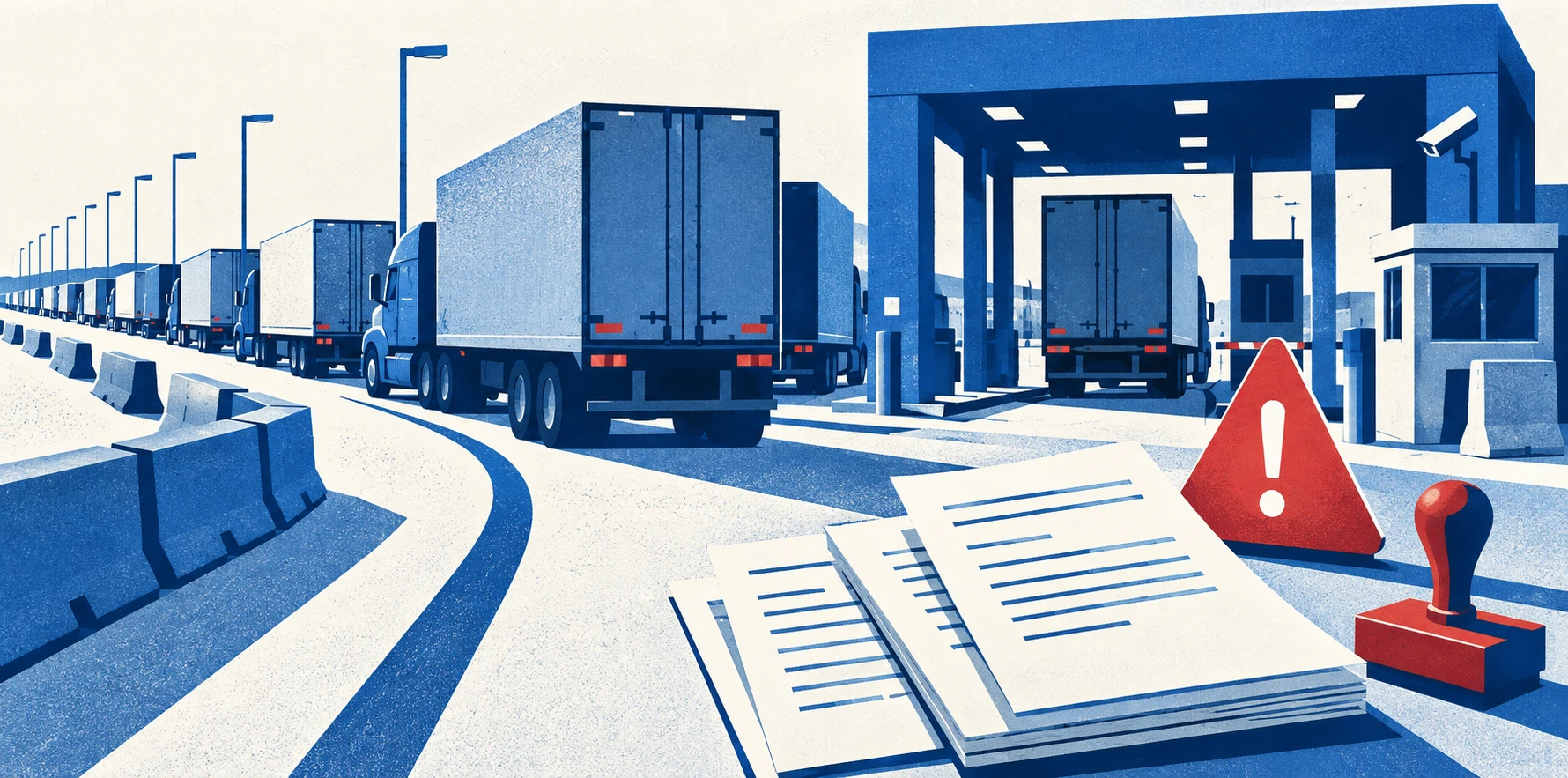
Tighter U.S. border enforcement is adding paperwork, compliance costs and potential delays for Canada-U.S. freight movements.
New reporting points to a sharp rise in the administrative burden facing companies moving goods across the Canada-U.S. border. Pacific Customs Brokers says requests from U.S. officials for shipment documentation have increased as much as tenfold over the past three years, while U.S. Customs and Border Protection audit activity this year is projected to run 26 per cent above its 2024 level. [1]
The reported change is not limited to tariff classification alone. Breanna Leininger, who leads U.S. operations for the Vancouver-based brokerage, said importers are being asked to build a more extensive evidentiary record to demonstrate compliance, including labour and manufacturing documentation. She also said both the required level of proof and the products subject to tariffs can appear to shift frequently, making customs compliance less predictable for shippers. [1]
For importers, exporters and logistics providers, the immediate exposure is operational: more staff time and broker involvement may be needed to assemble records, respond to inquiries and prepare for audits. Where documentation is incomplete or product treatment is disputed, the article reports that penalties have increased alongside freight screening, adding a potential financial cost beyond the tariff itself. [1]
The enforcement pressure arrives amid an escalating Canada-U.S. trade conflict and recent tariff rounds by both countries, according to the report. That context means border compliance is becoming a more material part of landed-cost and delivery-risk planning for businesses reliant on cross-border cargo, even where the underlying goods are not newly subject to a tariff. The reporting was first published on Sept. 11, 2026, and describes the enforcement changes as an ongoing development rather than identifying a single new customs rule or effective date. [1]
The evidence is broad rather than sector-specific, so the clearest implication is for freight-intensive supply chains across traded goods rather than a confirmed change in conditions for one named industry. The reported increases in audit activity, document demands and penalties nevertheless raise the prospect of added friction for Canadian firms selling into, sourcing from or transiting through the U.S. market. [1]
Significance is moderate because the reported enforcement tightening can affect a wide range of Canada-U.S. shippers through higher documentation workloads, audit exposure, delays and penalties. It is not rated higher because the available report does not quantify realized costs, delays or sector-specific effects, and it does not identify a discrete new enforcement measure or effective date. [1]