PBO cuts 2026 and 2027 growth outlook as trade measures cloud Canadian economy
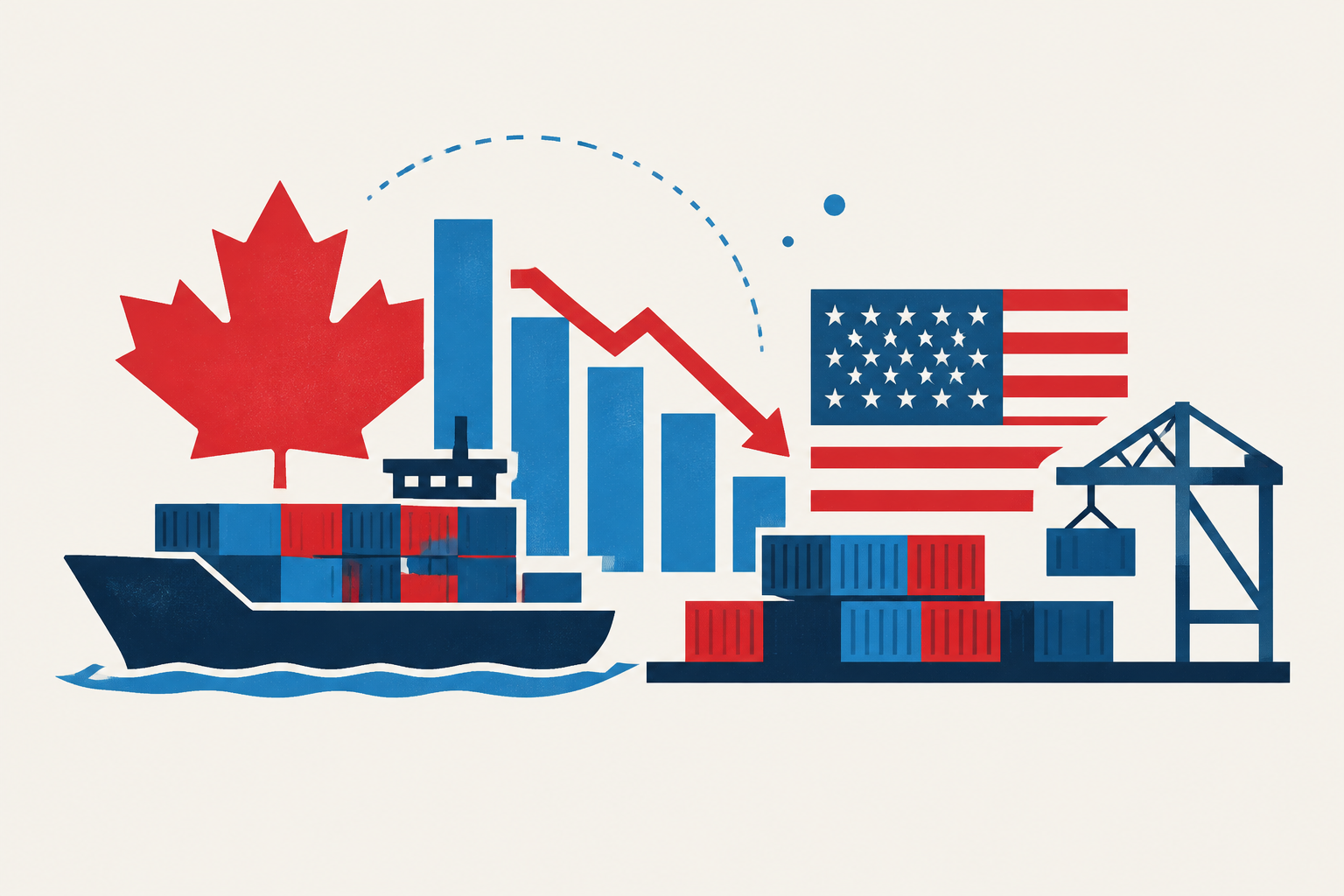
The PBO lowered its near-term growth forecasts, signaling a weaker operating environment as tariffs and countermeasures add uncertainty for Canadian businesses.
Canada’s Parliamentary Budget Office has reduced its outlook for real economic growth, projecting GDP growth of 0.9 per cent in 2026 and 1.5 per cent in 2027. Its June projection had put growth at 1.1 per cent this year and 1.6 per cent next year. The watchdog said further trade measures and persistent uncertainty are weighing on the country’s real output. [1]
The revision follows the breakdown of Canada-U.S. trade talks at the end of August and a subsequent round of U.S. tariffs and Canadian counter-tariffs, according to the report. For businesses, the forecast does not quantify effects by sector, but it points to a softer aggregate demand and investment backdrop while cross-border policy conditions remain unsettled. [1]
The PBO also sees a more difficult fiscal setting. It now forecasts a $63.3-billion federal deficit for 2026-27, rising to a peak of $70.2 billion in 2027-28. Compared with its June outlook, projected deficits are about $3 billion higher annually on average through 2030-31, with additional spending more than offsetting stronger revenue. [1]
Inflation and borrowing conditions remain part of the outlook. The PBO expects annual inflation to average 2.8 per cent in 2026, partly because of higher energy prices, before easing to 2.4 per cent in 2027. It assumes the Bank of Canada will begin increasing its policy rate in early 2027 and reach 2.75 per cent by mid-year to keep inflation expectations anchored. [1]
The forecast is a macroeconomic assessment rather than evidence of a new industry-specific tariff effect. It nevertheless reinforces the wider commercial consequence of the current trade dispute: companies face weaker expected national output alongside uncertainty over tariffs, retaliation and the path of bilateral negotiations. The PBO said longer-run results will depend heavily on whether capital-budget investments produce stronger productivity and economic capacity. [1]
This is a material national economic signal: the PBO cut projected real GDP growth for both 2026 and 2027 and directly attributed the weaker outlook to additional trade measures and ongoing uncertainty. The finding is relevant across trade-exposed industries, but it does not establish a new, sector-specific operational impact or tariff change, limiting the significance rating. [1]