U.S. 50% tariffs take effect on 110 Canadian products as selected exemptions begin
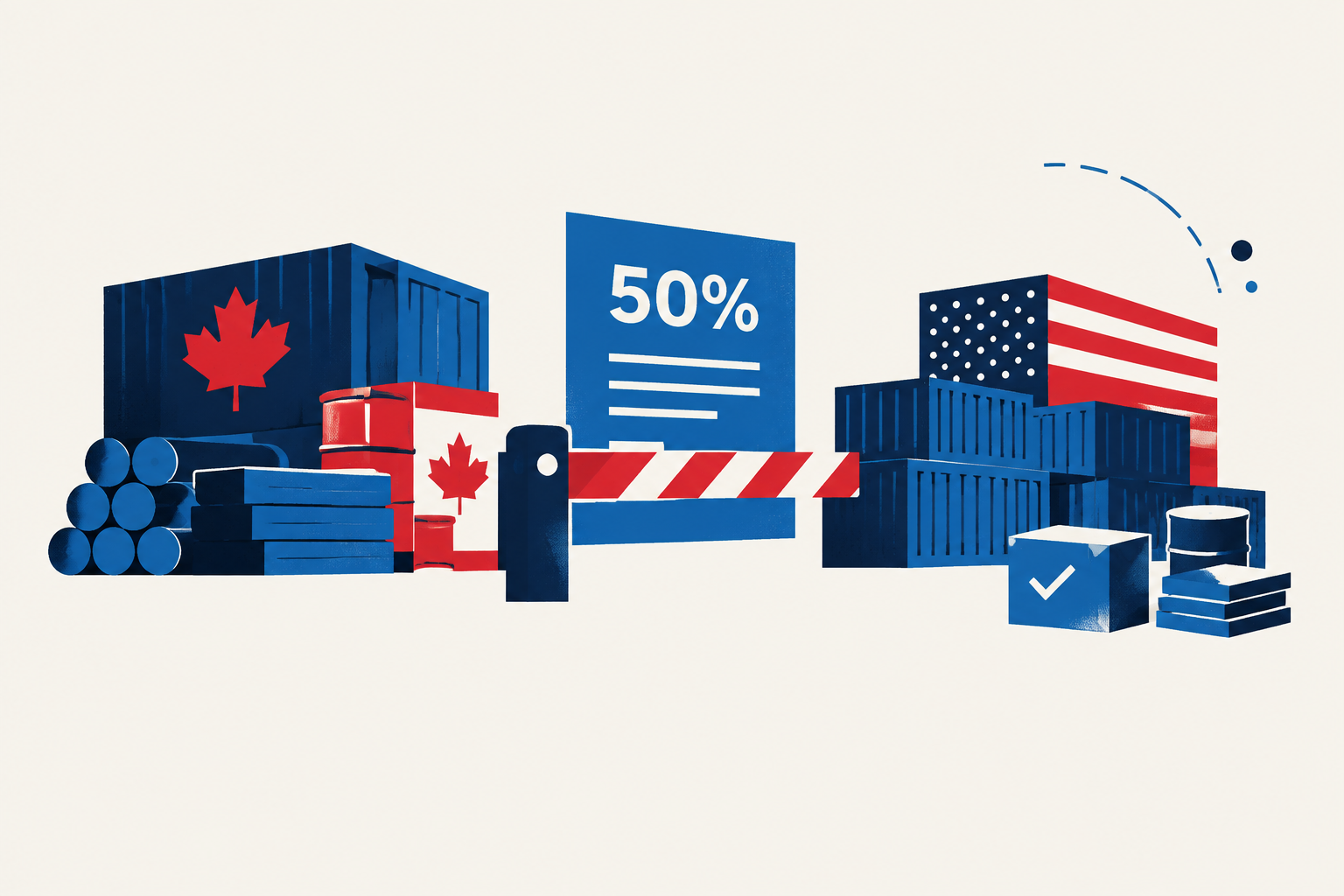
New U.S. duties now cover 110 Canadian product lines, narrowing some firms’ routing options despite near-offsetting exemptions.
A fresh set of U.S. tariffs took effect just after midnight on Sept. 15, applying 50 per cent duties to 110 Canadian products. The affected lines range from particular cheeses to motorboats, all-terrain vehicles and furniture, extending the latest round of product-specific trade restrictions into consumer and industrial goods. [1]
The additions include aluminum, paper and wood products, iron or steel beams, electric lamps and mattresses. For exporters, the significance is not simply the number of categories: the more detailed product coverage can constrain attempts to shift output toward closely related goods that had not previously faced tariffs. University of Ottawa trade-law specialist Wolfgang Alschner told CBC that the new product-level coverage had closed some such gaps, including for aluminum producers. [1]
At the same time, the United States removed tariffs on 10 Canadian items, including salt, sugar, cement, switchboards and toilet paper. The White House said the removals were intended to reduce the burden on U.S. commerce and serve the public interest. The exempted goods include sizeable Canadian supply flows: CBC reported U.S. imports of Canadian toilet paper were about US$328 million in 2024, while Canadian salt imports were roughly US$159.2 million in 2025. [1]
On aggregate, the revisions are close to trade-value neutral, according to Alschner’s analysis. Categories removed from the tariff list represented about US$2.41 billion in 2025 trade, compared with roughly US$2.56 billion covered by the additions. Switchgear assemblies and switchboards were the largest value category among the removals, with approximately US$750 million in U.S. imports from Canada in 2025; those products have uses that include automobiles and aircraft. [1]
The Sept. 15 implementation follows an Aug. 22 U.S. move to impose 50 per cent tariffs on a broad set of Canadian goods after bilateral trade talks did not produce an August agreement. Canada’s retaliatory tariffs on nearly 700 U.S. product categories took effect Sept. 8. Separately, a U.S. import ban announced for Canadian alcohol, motorcycles and several other goods is not due to start until Sept. 29. [1]
The simultaneous exemptions suggest U.S. policy is being adjusted where costs are especially difficult to replace or likely to reach American customers, particularly for inputs such as road salt and cement. But the near balance in trade values means the removals provide limited aggregate relief, while companies in newly covered aluminum, wood, paper, steel and consumer-product lines face immediate 50 per cent border costs and fewer product-mix alternatives. [1]
This is a high-significance implementation event because 50 per cent U.S. duties are now in force across 110 Canadian product lines, including aluminum, wood and paper products and steel-related goods. The simultaneous removal of tariffs from 10 categories moderates the aggregate expansion—Alschner estimates the added and removed trade values are nearly equal—but does not eliminate acute exposure for newly covered firms or the reduced ability to pivot among similar products. [1]