Bank of Canada says new tariffs are clouding business outlook despite third-quarter sentiment gains
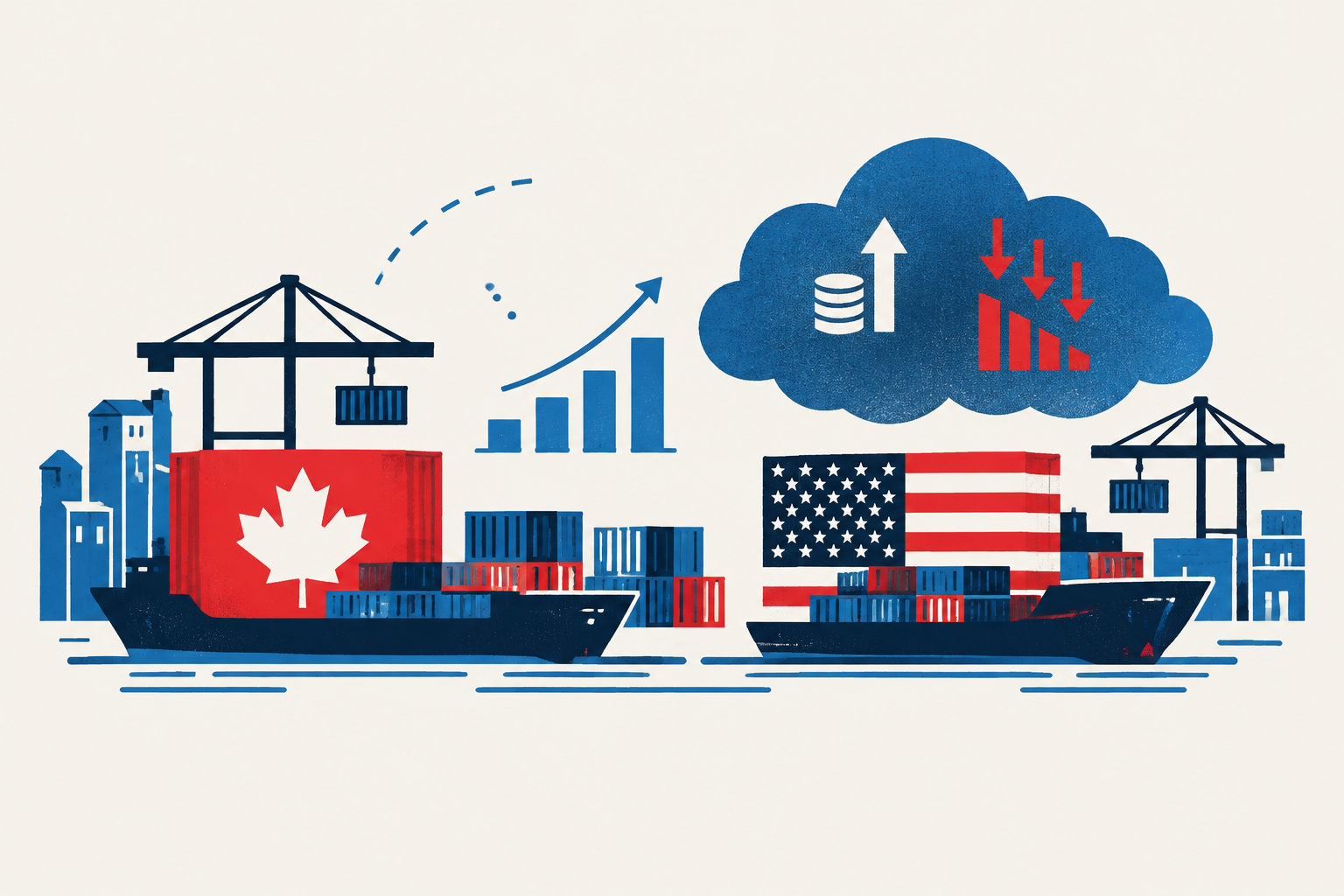
Canadian firms reported better third-quarter sentiment, but new bilateral tariffs are raising inflation expectations and weakening export, investment and pricing outlooks.
The Bank of Canada’s latest business outlook survey found that sentiment improved on average in the third quarter, with firms reporting stronger sales expectations than in the prior quarter. The improvement reflected a reduced drag from trade tensions and Middle East geopolitical uncertainty during much of the survey period, rather than a clear resolution of the bilateral trade environment. [1]
That timing is important for interpreting the result. The survey interviews ran from Aug. 6 to Sept. 2, and roughly three-quarters were completed before Canada-U.S. trade talks broke down at the end of August and new Canadian counter-tariffs were announced. Firms interviewed after that shift identified new U.S. duties on some goods and Canadian counter-tariffs as factors weighing on their outlooks. [1]
The central bank said the tariff developments are dampening business sentiment, weakening expectations for exports and investment, and adding to cost and price pressures. Inflation expectations have also moved higher alongside the tariffs and a recent increase in energy prices, pointing to a less favourable operating environment even as the average third-quarter survey reading improved. [1]
Businesses’ ability to pass those pressures through remains mixed. About half of surveyed firms expected to continue transferring some or all cost increases to customers, in part because demand had improved somewhat and companies sought to recover prior margin compression. More firms than in the previous quarter nevertheless said competitive conditions were constraining their capacity to raise prices. [1]
Investment intentions eased slightly but remained robust overall, supported by better demand conditions, according to the survey. The Bank of Canada’s separate consumer-expectations report, also conducted largely before the trade-talk breakdown, found that long-term inflation expectations had risen to match short-term expectations; consumers reported improved financial health from the prior quarter, while still citing high prices and economic uncertainty as concerns. The findings arrive ahead of the Bank’s Oct. 28 interest-rate decision and monetary policy report. [1]
This is a meaningful cross-economy warning rather than evidence of a realized sector-specific disruption: the Bank of Canada reports that newly cited U.S. tariffs and Canadian counter-tariffs are worsening firms’ export, investment, cost and pricing outlooks, while inflation expectations rise. The rating is not higher because the survey was largely completed before the late-August trade deterioration and provides no industry-level effect estimates. [1]